Introduction
Blockchain technology has transformed digital transactions, offering security, decentralization, and transparency. However, one major challenge remains—blockchains operate independently, like isolated islands. This means that assets and data on one blockchain cannot be easily transferred to another. This is where blockchain bridges come into play. They connect different blockchain networks, allowing seamless asset transfers.
In this article, we will explore how blockchain bridges work, their types, benefits, risks, and real-world examples.
What is a Blockchain Bridge?

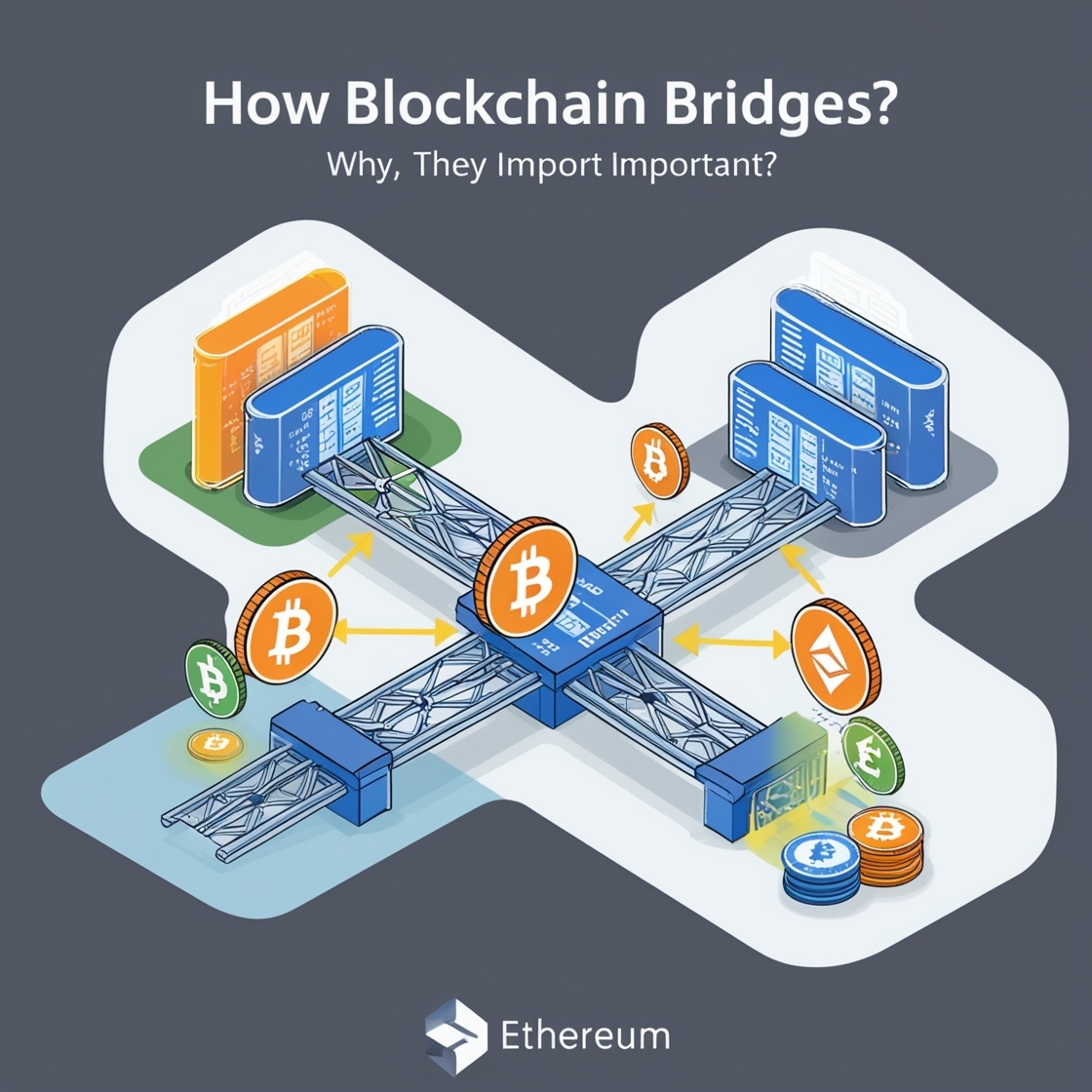
A blockchain bridge is a protocol that enables communication and asset transfer between different blockchain networks. Think of it as a bridge between two separate roads—without it, vehicles (or in this case, data and tokens) cannot move from one road to another.
For example, Ethereum and Binance Smart Chain (BSC) operate independently. If you want to use your Ethereum-based tokens (ERC-20) on BSC, a blockchain bridge can help you convert them into BEP-20 tokens and use them on the new network.
How Blockchain Bridges Work
Blockchain bridges work by locking assets on one blockchain and minting equivalent tokens on the other. Here’s a simple step-by-step explanation:
- Locking Tokens – A user sends tokens to a smart contract on Blockchain A.
- Verification – The bridge protocol verifies the transaction.
- Minting Tokens – Equivalent tokens are minted on Blockchain B.
- Using the Tokens – The user can now use the new tokens on Blockchain B.
- Redeeming Tokens – When the user wants to move back to Blockchain A, the process is reversed: tokens are burned on Blockchain B, and the original tokens are released from the smart contract on Blockchain A.
Example:
Imagine you own 1 ETH on Ethereum and want to use it on BSC. A bridge would lock your ETH and create 1 Wrapped ETH (wETH) on BSC. You can now trade or use wETH within the BSC ecosystem. If you want your ETH back, the bridge will burn your wETH and release the original ETH.
Types of Blockchain Bridges
Blockchain bridges can be classified into different types based on how they function and their level of decentralization.
1. Custodial (Centralized) Bridges
These bridges are controlled by a central entity or organization. Users must trust this entity to manage their assets securely.
Example:
- Binance Bridge – A centralized bridge that allows users to transfer assets between Binance Smart Chain and other blockchains.
2. Non-Custodial (Decentralized) Bridges
These bridges operate using smart contracts and decentralized protocols, eliminating the need for a central authority. They rely on cryptographic methods and validators.
Example:
- Portal (formerly Wormhole) – A decentralized bridge that connects Solana, Ethereum, BSC, and other chains using validators to confirm transactions.
3. One-Way Bridges
These allow assets to move in only one direction. Once transferred, assets cannot be sent back to the original blockchain.
Example:
- Wrapped Bitcoin (WBTC) – Converts Bitcoin (BTC) into ERC-20 tokens for use on Ethereum but does not support moving them back. Almost all bridges included Metamask swap allows this feature.
4. Two-Way Bridges
These bridges enable two-way transfers, allowing users to move assets back and forth between blockchains.
Example:
- Polygon Bridge – Supports two-way transfers between Ethereum and Polygon.
5. Swap-Based Bridges (Decentralized Swaps)
These platforms allow users to swap tokens across different blockchains without requiring them to be locked and minted as wrapped tokens. They provide liquidity pools for seamless cross-chain transactions.
Examples:
- PancakeSwap – A decentralized exchange on Binance Smart Chain that allows cross-chain swaps via integrated bridges.
- Jupiter – A popular swap aggregator on the Solana blockchain that enables cross-chain token swaps
Benefits of Blockchain Bridges
1. Cross-Chain Interoperability
Bridges allow different blockchains to interact, making decentralized applications (DApps) more versatile.
2. Lower Transaction Fees
By moving assets to a blockchain with lower fees (e.g., from Ethereum to Polygon), users can save money on transactions.
3. Expanded Use Cases
Users can access decentralized finance (DeFi) applications, NFT marketplaces, and gaming ecosystems on multiple blockchains.
4. Improved Liquidity
Bridges increase the flow of assets between blockchains, boosting liquidity and market efficiency.
Risks and Challenges
While blockchain bridges offer many benefits, they also have risks:
1. Security Vulnerabilities
Bridges are prime targets for hackers. In 2022, the Ronin Bridge suffered a $600 million hack, highlighting the need for robust security measures.
2. Centralization Risks
Custodial bridges require trust in a central authority, which can lead to potential manipulation or failure.
3. Smart Contract Bugs
Decentralized bridges rely on smart contracts, which can have vulnerabilities if not properly audited.
4. Slower Transaction Speed
Some bridges rely on validators or relayers, which can slow down the transfer process.
Real-World Examples of Blockchain Bridges
1. Polygon Bridge
Polygon Bridge allows users to transfer assets between Ethereum and Polygon, reducing gas fees and improving scalability.
2. Binance Bridge
A centralized bridge for transferring assets between Binance Smart Chain and other blockchains.
3. Avalanche Bridge
Facilitates asset transfers between Ethereum and Avalanche, offering a cost-effective solution for DeFi users.
4. Portal (Wormhole)
A decentralized bridge that connects Solana, Ethereum, and multiple other blockchains using validator nodes.
The Future of Blockchain Bridges
Blockchain bridges will continue to evolve with better security, faster transactions, and improved interoperability. Innovations like cross-chain smart contracts and zero-knowledge proofs may make bridges more efficient and secure.
Projects like LayerZero and Chainlink CCIP are also working to improve the way blockchains communicate, paving the way for a more connected blockchain ecosystem.
Conclusion
Blockchain bridges are crucial for the future of Web3, enabling seamless transfers across different blockchains. While they come with security challenges, ongoing innovations and security improvements will make them more reliable over time.
As the blockchain industry grows, bridges will play a key role in fostering interoperability, increasing liquidity, and expanding the use cases of digital assets. Whether you’re a trader, developer, or investor, understanding blockchain bridges will help you navigate the decentralized world more effectively.